
 PaLe012

|
Road to St. Gilles Panzer Lehr #13 |
||
|---|---|---|
| (Defender) Germany | vs | United States (Attacker) |
| Formations Involved | ||
|---|---|---|
| Germany |  |
130th 'Lehr' Panzer Division |
| Germany |  |
14th Fallschirmjäger Regiment |
| United States |  |
2nd "Hell on Wheels" Armored Division |

|


| Overall Rating, 6 votes |
|---|
|
4.17
|
| Scenario Rank: 64 of 1095 |
| Parent Game | Panzer Lehr |
|---|---|
| Historicity | Historical |
| Date | 1944-07-26 |
| Start Time | 09:45 |
| Turn Count | 20 |
| Visibility | Day |
| Counters | 168 |
| Net Morale | 0 |
| Net Initiative | 2 |
| Maps | 2: 26, 27 |
| Layout Dimensions | 86 x 28 cm 34 x 11 in |
| Play Bounty | 174 |
| AAR Bounty | 157 |
| Total Plays | 4 |
| Total AARs | 3 |
| Duplicates | PaL2013 |
| Battle Types |
|---|
| Delaying Action |
| Exit the Battle Area |
| Inflict Enemy Casualties |
| Road Control |
| Urban Assault |
| Conditions |
|---|
| Hidden Units |
| Off-board Artillery |
| Randomly-drawn Aircraft |
| Reinforcements |
| Smoke |
| Terrain Mods |
| Scenario Requirements & Playability | |
|---|---|
| Battle of the Bulge | Counters |
| Elsenborn Ridge | Counters |
| Fall of France 1 | Maps |
| Panzer Lehr | Base Game |
| Introduction |
|---|
|
The final plans of Operation Cobra called for the armor divisions to be held in reserve until Marigny and St. Gilles fell into U.S. hands. By the evening of the 25th, the Germans still held both villages, but CCA from 2nd Armored Division rumbled southward nonetheless. Panzer Lehr quietly prepared to receive the Americans after receiving control of the remnants of the 275th Infantry Division and the 14th Fallschirmjäger Regiment, 5th Fallschirmjäger Division. While the 275th Infantry was a competent outfit, the Fallschirmjägers were a completely different matter. They lacked training, weapons, complete uniforms and shockingly possessed few if any helmets. Little was to be expected of them in the coming fray. |
| Conclusion |
|---|
|
The Germans doggedly contested each hedgerow slowing the column to a crawl. Even worse, recent tests showing the 76mm gun inadequate to deal with Panther tanks were proven accurate. Luckily for the harried tankers, Army Air Corps General Pete Quesada's "cover column" concept of close air support proved devastating. This provided the thin edge needed for the tankers to secure St. Gilles. Surprisingly, they were not allowed to rest there as General Rose wanted to continue southward despite the coming nightfall. |

|
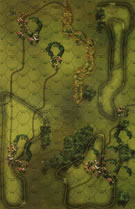
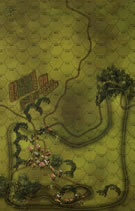
|
|---|
| AFV Rules Pertaining to this Scenario's Order of Battle |
|---|
|
| 130th 'Lehr' Panzer Division |
|---|
|


| Heer |
|---|
|


| Luftwaffe |
|---|
|


| Army |
|---|
|


| 4 Errata Items | |
|---|---|

|
Counter is mislabeled, this is actually a 75/41. (rerathbun
on 2013 Mar 06)
|

|
The morale and combat modifiers of German Sergeant #1614 should be "0", not "8". (Shad
on 2010 Dec 15)
|

|
All SPW 251s have an armor value of 0. (Shad
on 2010 Dec 15)
|

|
The M18 has a special rule in Battle of the Bulge but it applies globally: "A two-step M18 unit can fire one anti-tank shot and move half its movement allowance (retain fractions) in a single impulse. The order in which it does these two actions is the player's choice." (Shad
on 2010 Dec 15)
|
| Slow & Stop the Americans and Hold the Towns at all Costs! | ||||||||||||||
|---|---|---|---|---|---|---|---|---|---|---|---|---|---|---|
This was another fun-filled, very exciting, but gamey, 10-session play-through with the resilient & cunning, Col. Sonichu leading powerful, combined-arms elements of the US Combat Command A of the 2nd Armored Division in a 20-turn battle fought in the vicinity of St. Gilles in Normandy, France. I led dug-in defending elements of the German Panzer Lehr Division, and the depleted, 5th Fallschirmjäger Division in this intense, 2-map fight. The Germans side drew better than average leaders. The US leadership was only middling in this one. We used the FOW, smoke/illum, excess initiative, efficient unit movement & fire (US M-18s), extended assault, and hidden units (half the German units & leaders) optional rules. In addition, we tried these FOUR house rules: 1) Standardized Movement for Mechanized Units — All mechanized units may move through clear hexes at a movement cost of only 1 movement point (MP) per hex, instead of 1 1/2. Add one to this cost if moving up, across, or down slopes hexes, 2) German Assault Gun Activation — German Army, turretless STGs and Jagdpanzer units were typically crewed by artillerymen. Like halftracks, these units may be activated by ALL leaders, as well as Tank Leaders, unless prohibited by scenario rules, 3) Tank Leader Forward Observation — Full strength, EFFICIENT tank leaders may spot for ALL artillery & air strikes in accordance with the normal spotting rules (8.0, page 19). Just as leaders may spot enemy units, this action does not require an activation, and 4) Armored Fighting Vehicle (AFV) Consolidation — Reduced 2-step tanks, and other AFV units of the same type, nationality, and morale condition may be combined to form a single, full-strength unit. Both reduced units must start their activation in the same hex and be activated by an adjacent – or same-hex – good order, Tank Leader. This action costs both units all their movement points. Remove one of the units, flip the other to its full-strength side and mark it activated. Happily, this rule set provided improved playability, tactical flexibility & simplicity during our play-through. Our intense first session (game turns 1-2) consisted of the methodical American movement to contact as they poured south from the north map edge. They suffered 10 step losses, mostly to paratrooper opfires, including a platoon of M-4/76 tanks that encountered a dug-in STG III, who also lost a step in the exchange. The northern two, German-held towns on Map 26 were on their way to being surrounded by the end of game turn 2, as the powerful American advance gained ground & speed. This lengthy & bloody second session (game turn 3) continued the methodical American movement to contact that was periodically interrupted by relatively lethal, long-range, AT and ordinary opfire. Costs were heavy for both sides, with another 8 steps of US losses, and 5 German steps. US infantry began a pair of close assaults in contested town hexes occupied by weak garrisons of paratroopers. A headlong Jagdpanzer IV platoon with a death wish sallied from the northwest, 3-hex town – in a doomed effort to engage the GIs powerful, self-propelled artillery battery – and was promptly destroyed in a crossfire. The updated victory point tally was in favor of the Third Reich, 45-7. Our fast-paced & costly, third session (game turn 4-6) was filled with a variety of fate-induced, bad die rolls that plagued both sides, as the American advance continued southward. Smoke screens went awry, multiple morale checks did not work out, short-range, AT crossfires were missed, and substantial OBA concentrations repeatedly failed to score. Scrambling GIs liberated 2 more town hexes as they moved forward, screened by US armor in the center. During the 6th game turn, the American armored spearhead sprang forth from the covering north wood on Map 26 and into action in the open. Throughout this session, heavy fighting resulted in the loss of 10 US steps and a pair of Captains, while the Germans also lost a leader, and 3 more steps. The revised victory points score had narrowed, but was still in favor of the Third Reich, 52-14. The extremely intense, fourth session (game turn 7-8) was focused on a powerful American armored spearhead advancing south through “tank country,” supported by well-placed smoke screens, and a smaller, armored thrust against the remaining Wehrmacht armor on the defender’s left flank. Accurate German OBA was able to collapse one of the two, close assault hexes, but hard-fighting GIs were able to liberate a town hex in the second urban assault. A relatively close-range AT firefight on the German left went slightly better for Panzer Lehr, when they were able to escape a well-executed cross fire attempt, losing only a section of STG-IIIg assault guns. Scattered burning tanks in the open were all over Map 26 by the end of the session. Additional step losses were: 21 for the surging GIs, and another 5 for the stubborn German defenders this round. A combined SEVEN combat 7-die rolls were thrown, all at unfortunate moments for both sides. The updated victory points tally continued in favor of the embattled Panzer Lehr & Luftwaffe troops at 61-20. Our action-packed, fifth session (game turn 9-10) included a great deal of maneuver by both sides and a considerable amount of AT fire. There were 6 German steps lost, plus a lieutenant, in heavy fighting, while the American side lost another 7 steps. The remaining Luftwaffe garrison in the 5-hex township on Map 26 was eliminated in a successful close assault. Reinforcing elements of Panzer Lehr moved north from the south map edge this session, and a very brave company of GI armor supported by artillery and air units managed to eliminate one of the two Luftwaffe 88mm units in a close-range duel. A platoon of M-18s was decimated by dug-in Jagdpanzer IVs, while American infantry surged southward in support the isolated US tank platoons, battering the German garrison in the 3-hex town in the southeastern quadrant of Map 26. Victory points now stood at 68-27, in favor of the embattled Panzer Lehr & Luftwaffe troops. The tide appeared to turn in favor of the scrambling GIs during the sixth session (game turns 11-12) as they began advancing relatively unencumbered, as the last, Luftwaffe-manned 88mm ATG was eliminated, along with a further 8 German steps in a couple of spectacular game turns! Another town hex was liberated in a successful close assault, costing only a pair of American steps in this exciting session, as the Allied advance picked up momentum. Daring tank maneuvers by the leading American armor effectively split enemy fires and excellent air support helped flank the forward German positions. The victory point tally narrowed considerably, to 69-36 in favor of the reduced Panzer Lehr & Luftwaffe troops. Our very costly, seventh session (game turn 13-14) was notable for the liberation of another town hex by the advancing Americans, and the loss of 14 steps of GI armor, plus a defecting leader, in multiple AT firefights. The Germans shed 3 more steps and also had a leader loss in heavy fighting. Slowly, the Americans setup short-range, crossfire options for the remaining Wehrmacht armor in the 3-hex, hilltop town on Map 27. Victory points were now at: 84-42 in favor of the embattled Panzer Lehr defenders. This one is likely to come down to who wins the most tank vs tank fights in the final 6 game turns. The action-packed, eighth session (game turn 15) featured many close-range AT shots & adjacent-hex firefights, as both sides grappled in the mid-section of the battle map. Steps losses included another 7 for the GIs, and 6 more inflicted on the now-struggling German defenders. No town hexes changed hands this session, although the siege on the 3-hex town at the south end of Map 26 tightened considerably, as US infantry units caught up with the leading edge of the American armored spearhead. Elsewhere, US armor began climbing the lower slopes of the 40-meter hill mass on the north half of Map 27, and began bypassing German defensive positions. The victory point score was now: 90-48 in favor of the defending Panzer Lehr Division. Our exciting & costly, ninth session (game turns 16-17) encompassed very heavy fighting, that resulted in a combined total of 15 step losses! The American armored surge continued south with rapid probing actions on the contested 40-meter hill mass. These operations proceeded in spite of serious US tank losses in close-range AT firefights adjacent to the north margin of the 3-hex, hilltop town on the north edge of Map 27. In the meantime, the GIs besieging the 3-hex town on Map 26, increase their lethality in a pair of close assaults. The bulk of the US infantry and their supporting weapons continued moving south into the open areas on Map 26. The high mobility & decisive, tenth session (game turns 18-20) included desperate fighting that briefly liberated another town hex, before a small, but brisk, German counter attack left it in contested status. There were also many adjacent hex firefights, some misdirected OBA, a final smokescreen deployed by GI artillery and an effective P-47 air strike. The last Panzer Lehr forward observer was driven off, and the American mortars and self-propelled artillery, once again, proved their worth. In the end, the German defensive positions on the 40-meter hill mass remained in place, though battered by US tank & artillery fire. The combined steps lost by both sides was a whopping 157! At session end, the results were a German major victory, with the point score at: 125-57. There were 11 FOW-shortened game turns of the 20 played. This was a VERY fun to play, and exciting scenario. It had lots of opportunity for maneuver for both sides, and many decision points. While a bit gamey, this was a challenging & fun encounter that rates a 5, in spite of its minor flaws, and a recommendation for both SHARED and SOLO play. We will switch sides and play this one again in the near future. |
||||||||||||||
| 0 Comments |

| A Heck of a Combined Arms Struggle | ||||||||||||||
|---|---|---|---|---|---|---|---|---|---|---|---|---|---|---|
This was a 10-session, Vassal battle that could have gone either way but ended up as a US minor victory by the narrowest of margins - a 15 victory point difference! I had the US 2nd Armored Division, and Old Pueblo had the Panzer Lehr & paras in a very fun-to-play encounter that we started in May and finished in August. For a detailed treatment of this scenario, please checkout the T-rex's AAR, as our battle mirrored his experience, but with the American side coming away with the very bloody, close win in a balanced fight in mixed Norman terrain. We agreee that this one deserves a rating of 5 in shared, online play. |
||||||||||||||
| 2 Comments |
| Push South, Liberate the Towns & Exit the Map! | ||||||||||||||
|---|---|---|---|---|---|---|---|---|---|---|---|---|---|---|
This was another fun-filled, fast-paced, 9-session play-through with me leading combined-arms elements of the US Combat Command A of the 2nd Armored Division in a 20-turn battle fought in the vicinity of St. Gilles. My opponent was the tenacious & quick-thinking, Col. Sonichu, who led dug-in, defending elements of the German Panzer Lehr Division, and the depleted, 5th Fallschirmjäger Division in this intense, 2-map battle In Normandy. Both sides drew better than average leaders. We used the FOW, smoke/illum, excess initiative, efficient unit movement & fire (US M-18s), extended assault, and hidden units (half the German units & leaders) optional rules. In addition, we tried these FIVE house rules: 1) Standardized Movement for Mechanized Units — All mechanized units may move through clear hexes at a movement cost of only 1 movement point (MP) per hex, instead of 1 1/2. Add one to this cost if moving up, across, or down slopes hexes, 2) German Assault Gun Activation — German Army, turretless STGs and Jagdpanzer units were typically crewed by artillerymen. Like halftracks, these units may be activated by ALL leaders, as well as Tank Leaders, unless prohibited by scenario rules, 3) Tank Leader Forward Observation — Full strength, EFFICIENT tank leaders may spot for ALL artillery & air strikes in accordance with the normal spotting rules (8.0, page 19). Just as leaders may spot enemy units, this action does not require an activation, 4) Voluntary Unit Reduction — Players may voluntarily reduce 2-step personnel units to 1-step (halved) units if they have at least one leader of MAJOR or higher rank among their side’s assigned force. To do so, the unit to be halved must begin the player’s activation phase in the same hex or in an adjacent hex to a CAPTAIN or higher rank. The full-strength unit to be halved must be in good order and this action costs all the reduced unit’s movement points. Remove the full-strength unit and replace it with 2 reduced strength units. Mark both — and the leader — as activated, and 5) Armored Fighting Vehicle (AFV) Consolidation — Reduced 2-step tanks, and other AFV units of the same type, nationality, and morale condition may be combined to form a single, full-strength unit. Both reduced units must start their activation in the same hex and be activated by an adjacent – or same-hex – good order, Tank Leader. This action costs both units all their movement points. Remove one of the units, flip the other to its full-strength side and mark it activated. Happily, this rule set provided improved playability & simplicity during our play-through. The leading edge of GIs began advancing south from the map edge, using all 13 edge-hexes as their line of departure. They were accompanied by a trio of armor companies that were concentrated on either flank of the infantry formations. Unexpectedly, the Germans began a tactical withdrawal from the easternmost 3-hex village almost immediately, while their comrades in the 4-hex engaged in multiple adjacent-hex firefights. In the center, the probing Yanks encountered a hidden company of Panzer Lehr in the forest. GIs quickly liberated the 3-hex village and began sniping at the retreating Germans as they started crossing the central open space. This session ended prematurely before a heavily armed P-47 strike could reach the battlefield. The initial step loss tally was: 7 for the Germans, to 3 for the Americans, resulting in a reduction of Wehrmacht initiative level. The remaining German-held town on Map 26 was on its way to being surrounded by the end of game turn 3, as the American advance gained ground and flanking positions. All in all, an exciting first session (game turns 1-3) with a victory point score of 22-10 in favor of the Third Reich boys. Our high mobility, second session (game turn 4) featured the American right flank troops surrounding & liberating nearly all of the 4-hex town on Map 26. Panzer Lehr units began a well-executed, tactical withdrawal from this town and adjacent hexes. To the east, a close assault in the other, 3-hex town was successful, and additional GI units infiltrated south on both sides of that town. An unexpectedly fruitful close assault eliminated a Jagdpanzer IV platoon, while the other Jagdpanzer unit escaped south with smoke screen cover, after an attempted close assault in the open. Step losses this session were 9 to the Germans, and another pair to the Americans. The updated a victory point score was now 23-16 in favor of the advancing GIs. The delayed, third session (game turn 5–6) featured the continued tactical withdrawal of Panzer Lehr infantry before the pursuing American elements. Clever use of smokescreens by the Wehrmacht prevented long-range AT fire from the leading edge US tanks on the eastern half of the battle map. However, the following turn saw the demise of the last Jagdpanzer platoon in an open- field crossfire. Probing GIs and AFVs continued their mad dash down the east edge of the battle map, and managed to locate both a German 88 and a 75 PaK-40 that combined to kill a section of Shermans and also reduced an M-5 platoon. Unexpectedly accurate, American OBA eliminated the 88 gun on the long, east-west 40-meter ridge on the north margin of Map 27. Our action-packed & lengthy fourth session (game turn 7-8) was characterized by the increasing speed of the left & right flank American advances, with the left (east) pushing farther south than the right (west) flank, in spite of considerable OPFIRE. Behind the leading edge of GI units, the final holdout Wehrmacht garrison in the 4-hex town was eliminated in a close assault during game turn 8, as the American headlong push south continued in very heavy fighting. The Germans continued a methodical tactical withdrawal, south and began veering their troops to the southeast to establish blocking positions on the heights south of the 3-hext town in the southwest corner of Map 26. In response, more US armor was added to the right flank thrust, and one of the scouting M-5 light tank platoons managed to capture a truck-bound, PaK40 AT gun platoon, in the open on Map 27, after a failed US airstrike. GI artillery eliminated another PaK 40 AT gun on Map 26, exposing an AA gun emplacement and a Lehr 120mm Mortar platoon. Step losses this session were even at 8 steps apiece, resulting in the US side dropping a level of initiative. The updated victory point score was narrowed to 43-30 in favor of the Americans. The step loss tally in the game so far, was 33 steps lost for the embattled German defenders, and 18 for the surging GIs. The much delayed, fifth session (game turn 9-11) was a frustrating one for both sides with a combined SEVEN combat 7-die rolls, US tanks getting shot up in close assaults, and several close range firefights that turned out badly. Also, both sides’ OBA was mostly ineffective. The Germans managed to recover multiple town hexes that had been briefly liberated. Slowly, the GIs in the center and on their right flank began emerging from the woods, and pushed south in the open. Casualties included: 5 more Panzer Lehr steps, plus 3 leaders, and another 8 American steps lost. Combined arms, Wehrmacht reinforcements began arriving from the south map edge on game turn 10, which may turn the tide of battle in this one. Our high mobility & exciting sixth session (game turn 12-13) featured very heavy fighting in many sectors of the battle map. In the north end of Map 26, the final reduced Wehrmacht infantry platoon in the woods was eliminated in a close assault. Elsewhere, embattled US armor lost two tank platoons in close assaults to panzerfaust AT rockets, while a pair of Panzer Lehr infantry platoons, a section of 81mm mortars, and another section of German paratroopers fell in adjacent-hex firefights. In the southernmost portion of the battle map, German reinforcements were able to reach the 7-hex town just in time. Swarming American troops liberated all but a single hex of the 3-hex town on the ridge, as their Wehrmacht opponents continued a tactical withdrawal under cover of well-deployed smokescreens. Session casualties totaled: 7 more Panzer Lehr steps, plus a single leader, and another 8 American steps. The revised victory point score was 53-48 with the struggling Americans slightly expanding their narrow lead. The tide appeared to turn in favor of the scrambling German defenders during the seventh session (game turns 14-15) as their reinforcements continued advancing, unencumbered on the lower half of the battle map. They were able to expand their defensive positions in and around the 7-hex town. Casualties were heavy for both sides, with a further 9 German steps and 3 leaders eliminated, as well as 13 American steps in a couple of spectacular game turns! The GIs were able to liberate another pair of town hexes in costly close assaults, and pushed their extended columns, south. Daring tank maneuvers by the leading American armor elements effectively split enemy fires, but their air support failed to provide the edge needed for the anticipated mass movement off the south map edge. The victory point tally was now, to 77-57 in favor of the battered GIs. Our high maneuver & exciting eighth session (game turn 16-17) included the destruction of the last exceedingly deadly, German 88mm AT gun in a successful airstrike, as well as a great deal of maneuver by both sides on Map 27. Panzer Lehr actively consolidated its defensive positions in the 7-hex township with a company of Panther tanks, and also established blocking positions elsewhere, to prevent further infiltration by American armored units through the east map edge. Simultaneously, the GIs completed the long-anticipated, liberation of the 3-hex village in the southeast quadrant of Map 26. Remarkably, Panzer Lehr lost 3 leaders this session in the heavy fighting. The victory point score narrowed a bit to 73-57 in favor of the advancing Americans. The high mobility & decisive final session (game turn 18-20 ) featured significant US step losses at 20, plus a leader! The Germans lost only 7 steps and a leader. Most of the fierce, close-range fighting this session was in and around the 7-hex town, where the German garrison controlled 3 town hexes, with another hex contested in a close assault. GIs controlled the other 3 town hexes, including the critical 0411 & 0511 hexes, that would have provided another 5 VPs to the Wehrmacht score. Another 8 steps of American armor was able to exit the south edge. The concluding victory point score was 80-67 resulting in a minor victory for the exhausted American side. There were 9 FOW-shortened game turns of the 20 played. This is a fun to play, costly, yet surprising scenario, with many opportunities for bold maneuver and plenty of crucial, decision points. While gamey: for example, exiting demoralized US units of the south map edge still counts for victory points (!) this remains a challenging & entertaining battle simulation. It rates a 5, in spite of its minor flaws, and a recommendation for both SHARED and SOLO play. We switched sides for this one, and were pleasantly surprised that the outcome differed considerably from our previous play-through. |
||||||||||||||
| 0 Comments |