
 PACA021

|
Counterattack at Muňoz Pacific Armor #22 |
||
|---|---|---|
| (Attacker) Japan | vs | United States (Defender) |
| Formations Involved | ||
|---|---|---|
| Japan |  |
2nd 'Geki' Tank Division |
| United States |  |
20th Infantry Regiment |

|


| Overall Rating, 0 votes |
|---|
|
0
|
| Scenario Rank: --- of 1094 |
| Parent Game | Pacific Armor |
|---|---|
| Historicity | Alt-History |
| Date | 1945-02-01 |
| Start Time | 16:00 |
| Turn Count | 24 |
| Visibility | Day & Night |
| Counters | 121 |
| Net Morale | 0 |
| Net Initiative | 0 |
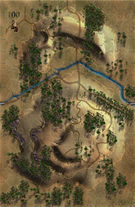
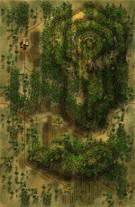
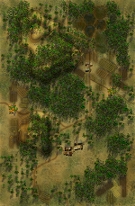
| Maps | 3: 100, 82, 83 |
| Layout Dimensions | 84 x 43 cm 33 x 17 in |
| Play Bounty | 196 |
| AAR Bounty | 168 |
| Total Plays | 1 |
| Total AARs | 1 |
| Battle Types |
|---|
| Inflict Enemy Casualties |
| Road Control |
| Urban Assault |
| Conditions |
|---|
| Entrenchments |
| Randomly-drawn Aircraft |
| Reinforcements |
| Terrain Mods |
| Scenario Requirements & Playability | |
|---|---|
| Leyte '44 | Counters |
| Marianas 1944 | Maps |
| Pacific Armor | Base Game |
| Saipan 2 | Maps + Counters |
| Introduction |
|---|
|
With the American advance halted, the next step for the Japanese would be to attack them. This might not have been the best decision in terms of the wider campaign, but the 2nd Tank Division had tasted victory and now would push the enemy back as the first step toward defeating the invasion. |
| Conclusion |
|---|
|
Japanese armored divisions had only seen combat against the poorly-armed Chinese when the Americans invaded Luzon in January 1945. By this point in the war, other armies had discovered that their tanks needed plentiful infantry to accompany them (the Russians would re-discover this lesson in 2022). The Japanese armored divisions, in contrast, had very little motorized infantry. |

|
|
|---|
| AFV Rules Pertaining to this Scenario's Order of Battle |
|---|
|
| Imperial Japanese Army |
|---|
|


| Army |
|---|
|


| Pacific Armor, scenario #22: Counterattack at Munoz | ||||||||||||
|---|---|---|---|---|---|---|---|---|---|---|---|---|
Pacific Armor, scenario #22: Counterattack at Munoz Unlike scenario 21, in scenario 22 the Japanese are the attacker and do much better as the attacker than as the defender in the previous scenario. At first I thought they didn’t have a chance with almost the same Infantry amounts but they have way more armor, 33 to 9 units counting their large Type 4, Chi-To reinforcements, which have a better ATG than the Shermans. Speaking of reinforcements the Japanese get air-support as well but with dusk, they will only be able to use them a few turns. Besides the armor advantage, the Japanese also have a lot of ATGs on the map and both sides have about an equal off map artillery and on map mortars. Once the Japanese eliminated all the American armor, there was little the Americans can do but to defend objective points with Infantry, while the Japanese can pull adjacent with armor and blast away and assault with Infantry and armor. One interesting combination was a stack of SS-Ki & Ho-Ro assaulting together and getting that three column shift for a flame throwing vehicle. I was very surprised to see the Japanese win a major victory in this scenario, as it playout totally different than I had envisioned. A hypnotical scenario that was worth playing. I think the Americans were too aggressive with their armor and lost it early, thinking they could dominate as usual but the Japanese had too many guns to prove otherwise. |
||||||||||||
| 0 Comments |